Signs of a leaky home: the building features to check, and which are waterproofing jobs
A plain-English walk around the outside of your house, using the official checklists
Most of the calls we get start the same way: a stain on a ceiling, a soft spot by a door, or a deck that holds water after rain. The official signs of a leaky home are often less obvious than that, because they’re about how a house is built rather than damage you can already see. Here’s what the government’s guidance says to look for, and which items are usually membrane or waterproofing work.

Which homes carry more risk?
The government’s home-buying site, settled.govt.nz, says homes built in the Mediterranean style, without eaves and with flat roofs, using monolithic cladding are higher risk, especially those built between the late 1980s and the mid-2000s. MBIE’s buying-a-house checklist adds that, for houses built or majorly renovated after the early 1990s, features such as balconies above rooms, internal gutters, complicated roofs, little or no eaves and parapets without sloped tops raise the risk. Plenty of North Shore and East Auckland homes from that era tick several boxes.
The features to check, and who usually fixes them
1. Flat roofs and parapets
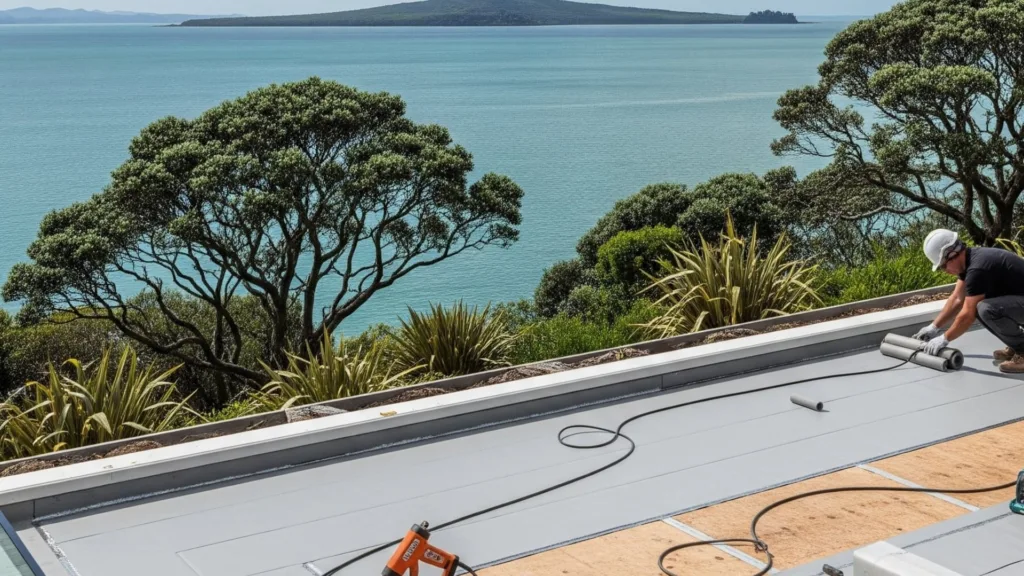
Parapet walls should have flashings covering their top surface. A flat roof needs falls to its outlets and sound upstands. Roof membranes and parapet cappings are waterproofing work. See our roof waterproofing page.
2. Enclosed balconies and cantilevered decks
Settled lists a lack of slope on the balustrade, handrails fixed through the plaster cladding, a poorly applied waterproof membrane, too few drainage holes so water pools, and no clearance between the cladding and the deck floor. The membrane, outlets and junctions are waterproofing jobs. Our deck waterproofing page covers the options.
3. Internal gutters
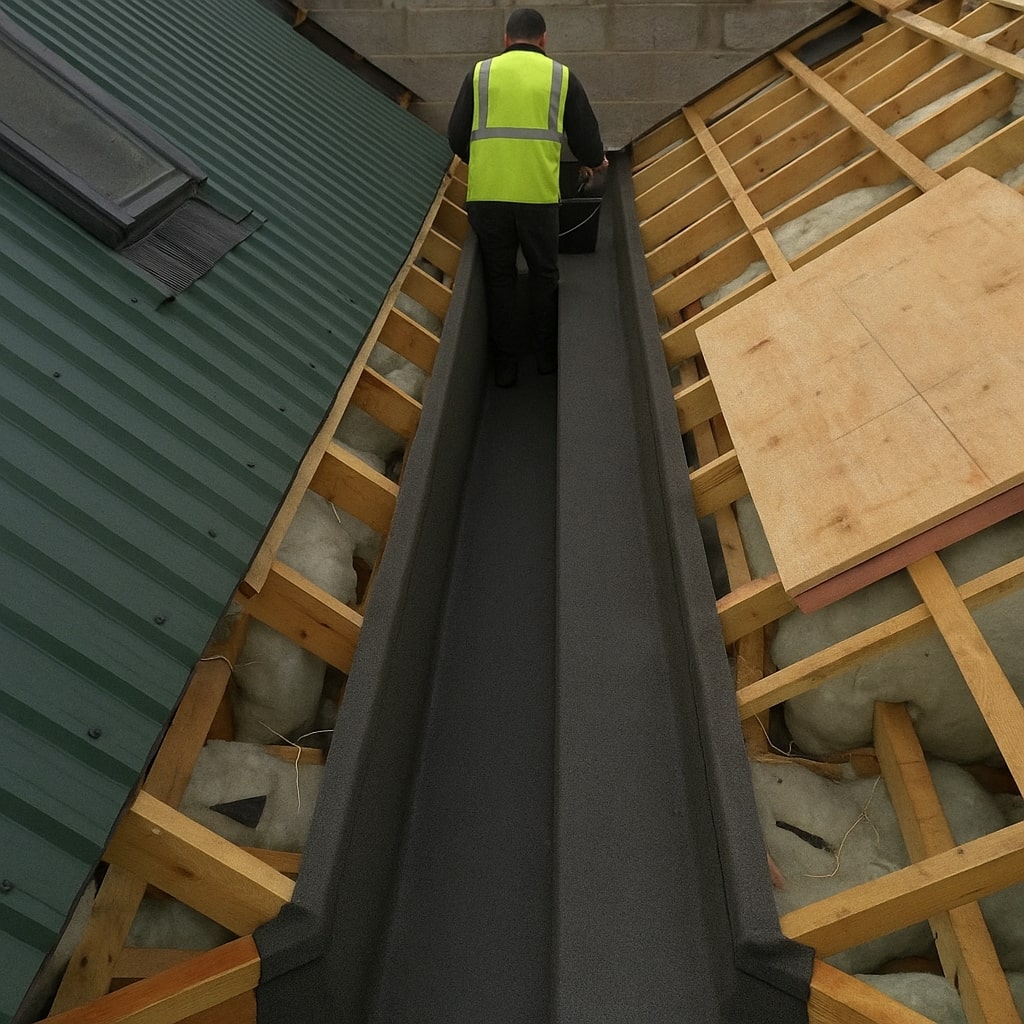
A gutter built into the roof needs a continuous membrane and good falls. When it overflows, the water goes inside rather than off the edge. Our gutter waterproofing guide explains more.
4. Ground and deck clearances
Cladding should be clear of the ground, paving and decks. Settled gives 150mm to solid ground such as concrete, paving or decking timber, and 225mm to soil. Decks should sit below internal floor levels. These are often design or building fixes, sometimes combined with membrane work at the threshold.
5. Cracks and joinery seals
Hairline cracks in the cladding near windows and doors, and cracked seals between the joinery and the cladding, are cladding and joinery work, not membrane work.
6. Window flashings and penetrations
Windows need flashings that direct water out and down. Pipes, vents and meter boxes through the cladding need proper flashing, not just sealant. Pergolas fixed straight through the cladding are another entry point. These are usually builder or cladding jobs.

What to do if your home has several of these features
Having the features doesn’t mean your home is leaking. It means it’s worth a proper look. Settled recommends an independent building inspection by someone who understands weathertightness. Inspectors can use a moisture meter to check for water without making holes in the walls. Ask them to note anything they couldn’t check.
If the inspection points to a roof, deck, balcony or gutter, that’s where Auckland Waterproofing Experts comes in. For basements and garages, our post on early signs your basement is about to leak covers what to look for below ground.
Questions we get about leaky homes
My house was built in 1998 with plaster cladding. Is it leaky?
Not necessarily, but the official guidance treats that combination as higher risk, so an independent inspection is a sensible step.
Can a new membrane fix a leaky balcony?
Sometimes. If the membrane, outlets or upstands are the problem, replacing them can solve it. If the cladding, balustrade fixings or framing are also involved, they need to be fixed too, and consent may be needed.
Where do I start?
Walk around the outside with the list above, take photos, then get the right person to look at the areas that concern you.
Worried about a deck, balcony or flat roof?
Send us photos or book a visit and we’ll tell you honestly whether it’s a waterproofing job. Call us at Auckland Waterproofing Experts on 022 630 6434 for a free site visit. We’ll explain what we find in plain English and send you an itemised quote. You can also read our waterproofing FAQs.
Email aucklandwaterproofing@gmail.com. We’re available 7am to 7pm, Monday to Saturday, based in Castor Bay and working across Auckland and the North Shore.