Below Ground Waterproofing and Tanking in Auckland: Systems, Standards & Solutions
Auckland Waterproofing Experts
“In Auckland, moisture doesn’t take a day off. Neither should your building’s waterproofing.”
— Auckland Waterproofing Experts
This guide covers tanking systems in detail. For the complete basement renovation process including costs and consent, see our comprehensive basement renovations guide For interior basement waterproofing jobs, see our basement waterproofing with HydrEpoxy page.
Below Ground waterproofing and Tanking in Auckland: Systems, Standards & Solutions
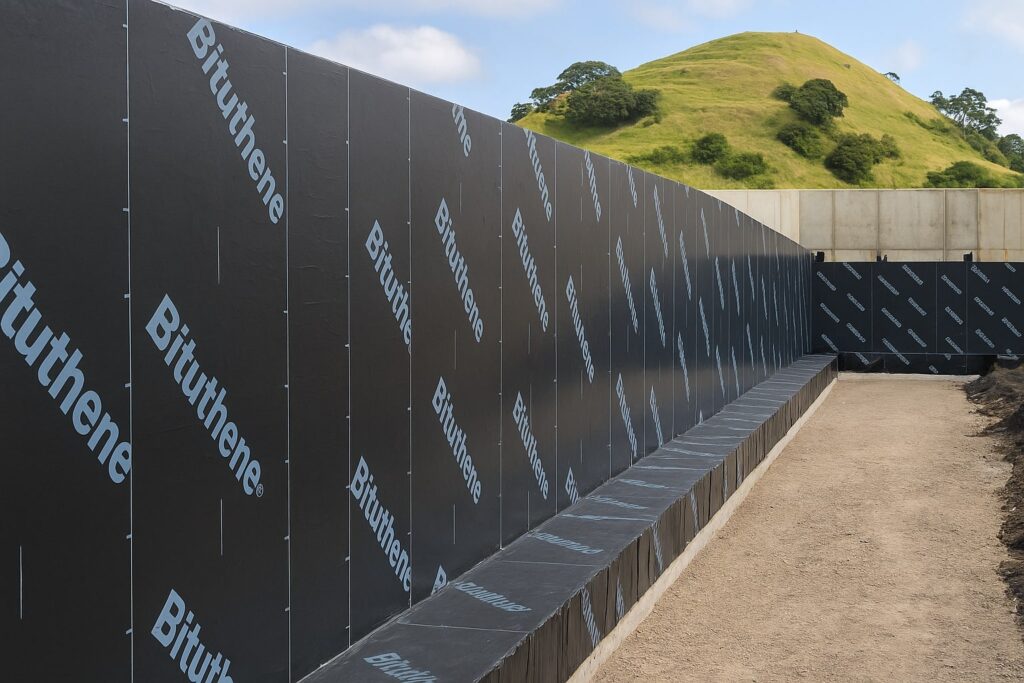
Peel and Stick Tanking Membrane
What Is Below Ground Tanking?
Below ground tanking involves installing durable waterproof barriers to the outside (and sometimes inside) of any part of a building that sits below ground level (like basements, cellars, or retaining walls). The goal is simple: stop water from finding its way into occupied or structural spaces, preventing leaks, mould, and long-term damage.
Why It Matters in Auckland:
Whether you’re building new or renovating, tanking is an investment in your building’s health, resale value, and liveability.
Auckland’s Below-Ground Waterproofing Challenges
Like roofing, Auckland’s underground environments face multiple, sometimes competing, threats:
Risk Factors:
Understanding Tanking Systems & Materials
Not all tanking systems are made equal. The right product depends on site conditions, budget, expected service life, and council requirements.
Main Tanking Systems
| System Type | Application Area | Strengths | Typical Use Cases |
|---|---|---|---|
| Self-adhesive Sheet Membranes (e.g. “Peel & Stick”) | Walls, slabs (external) | Fast install, proven record, cost-effective | Basements, residential, additions |
| Torch-on Bitumen Membranes | Floors, walls (external) | Very robust, heat-welded seams, thickness | High-risk, wet sites, deep basements |
| Bentonite Clay Sheets | Walls, floors (external) | Swells to seal gaps, easy detailing, resists shifts | Retaining walls, tunnels |
| Cementitious/Liquid Applied Membranes | Complex shapes, repairs | Seamless, patchable, varied chemistry | Upstands, detail work, internal tanking |
| Watertight Concrete Additives (Integral system) | New pours only | Multi-layered protection, integral structure | New builds, commercial basements |
| Cavity Drained Systems (Type C) | Internal | Manages moisture, suited to high water table | Retrofits, high-consequence spaces |
Key NZ Brands:
- Viking Peel & Stick (self-adhesive)
- Nuralite Nuraply 3PT (torch-on)
- ARDEX Shelterseal WPM3000x
- Volclay Swelltite
- SIKA Blackseal
Product Comparison
Product Comparison Table
| Product Type | Resistance to Water | Ease of Detail | Life Expectancy | Typical Substrates |
|---|---|---|---|---|
| Sheet Membrane | Excellent | Good | 20-30 years | Concrete, masonry |
| Torch-on | Excellent | Excellent | 25+ years | Concrete, block |
| Bentonite Clay | Good | Good | 20+ years | Concrete, block |
| Liquid Applied | Good | Excellent | 15-20 years | Concrete, block, brick |
| Integral System | High (if well detailed) | N/A | 50+ years | New concrete |
System selection must consider: expected water pressure, substrate, temperature at install, accessibility for repairs, and compatibility with other drainage elements.
Standards, Compliance & Best Practice
NZ Context
Council & Compliance Checklist:
- Ensure substrate readiness (clean, dry, correct surface)
- Use only approved membranes with warranty
- Maintain full product documentation & photographic installation records
- Flood test before backfill/covering
- Use only LBP (Licensed Building Practitioner)
Building Code, consent and Council inspection (2026)
Below-ground tanking has no off-the-shelf answer in the Building Code. As BRANZ explains in Building down, Acceptable Solution E2/AS1 doesn’t give a damp-proofing solution for basement walls. Most basement tanking systems are therefore put forward at building consent as an alternative solution. The exception is concrete masonry built to NZS 4229, whose Appendix A has basement details. BRANZ also notes that clause B2 Durability expects waterproofing that can’t be reached later to last at least 50 years.
What’s changing
MBIE’s Building Code programme of work (updated February 2026) lists support for the sector to develop and update codes of practice that can show compliance with clause E2 for below-ground tanking work. The next Building Code update is due in 2028. Until then, the consent documents and the manufacturer’s system details remain the reference for each job.
What Auckland Council checks
Auckland Council’s guide to booking inspections (June 2026) includes a specific inspection for tanking and subsoil drains behind retaining walls. At that inspection, Council:
- checks the membrane is installed to the manufacturer’s specifications and the approved consent
- inspects the junction between the foundation membrane and the wall membrane when the wall is part of a habitable space
- checks the subsoil drain, which must connect to an approved outfall through a sump
The membrane applicator also provides a PS3 producer statement for each membrane application. It’s supported by photos of the substrate, primer, membrane thickness, laps and junctions taken before backfilling. Once the wall is backfilled, those photos are the only record of what’s behind it.
When the outside can’t be reached
On existing homes, digging out a wall isn’t always possible. In those cases, Auckland Waterproofing Experts uses ARDEX WPM 300 HydrEpoxy, applied to the inside (negative side) of the wall. ARDEX gives a 10-year product warranty on it, and Auckland Waterproofing Experts gives a separate 5-year workmanship warranty. Call 022 630 6434 for a free site visit to talk through which approach suits your wall.
Step-by-Step Tanking Process
- Site Assessment
- Survey water table, drainage, soil type, and ground movement risks.
- Identify and remedy cracks or structural defects.
- Surface Preparation
- Excavate all relevant below-ground walls and slab edges.
- Clean, repair, and prime surfaces.
- Install drainage (subsoil/French drain) if not present.
- Detailing/Joint Preparation
- Flash all joints, penetrations, construction/service (pipe) inlets.
- Apply corner reinforcement and bond breakers as per manufacturer.
- Membrane Installation
- Self-Adhesive: Apply primer; stick sheets to wall/floor, roll with pressure.
- Torch-on: Heat-apply membrane—ensure full weld at overlaps.
- Bentonite: Place sheet with overlaps; backfill carefully to activate.
- Liquid Applied: Apply by brush or spray, multiple coats, cure as specified.
- Inspection & Testing
- Inspect for coverage gaps, wrinkles, or weak seams.
- Document with photographs.
- Protection & Backfilling
- Apply protection boards/mesh to prevent membrane puncture during backfilling.
- Reinforce protection with Polystyrene.
- Backfill with Scoria.
- Final Certification
- Auckland Council Inspection.
- LBP signoff, producer statement, manufacturer’s warranty secured.
Pro Tip: Once tanking is covered, fixing failures is extremely costly—get it right the first time.
Maintenance: Protecting Your Investment
What to watch out for: bubbling plaster, water stains, or musty odours are early red flags.
Troubleshooting, FAQs & Common Issues
| Issue | Likely Causes | Solution |
|---|---|---|
| Damp basement | Poor detailing, hydrostatic load | Check/drainage, inspect membrane |
| Efflorescence | Water wicking from masonry | Address leaks, repair tanking, improve drainage |
| Leaks at joints | Missed/separated seams | Professional repair, compatible patch |
| Mould & odour | Ingress + poor ventilation | Fix membrane, add venting/dehumidifier |
| Ponding water | Blocked drainage | Clear drains, regrade |
| Early failure | Incompatible products or shortcut | Full strip and re-tank with approved system |
Faqs
Choosing the Right Tanking Specialist
Expertise is everything—this isn’t a DIY job. Look for:
Key Questions to Ask
Final Takeaways
- Tanking is mission-critical below ground in Auckland’s wet environment.
- Choose proven, council-approved systems and experienced installers—don’t cut corners.
- Regular inspection and proactive maintenance guarantee dry, healthy, and saleable underground spaces.
Related Blog Posts & Further Reading
To learn more or arrange a specialist consultation, simply complete our easy online form. Our experienced team will be in touch promptly to discuss your needs and recommend the perfect solution for your project.