
Auckland Waterproofing Experts waterproofs leaking basements from the inside. We coat block and concrete walls and slabs with ARDEX HydrEpoxy, so there is no dig-out outside. Over 20 years’ combined experience across Auckland, densest on the North Shore.
Licensed Building Practitioner-led, over 20 years’ combined experience. We supply materials and install basement waterproofing across Auckland.
If water is weeping through your basement walls, pooling on the slab or pushing salt out through the paint, another coat of paint won’t fix it. The water is coming through the wall or slab under pressure from the ground, so it has to be stopped at the concrete or block itself. That’s what we do, from the inside, with no digging outside.
Signs your basement needs work
Some basements announce it with a puddle. Most give quieter signs first. These are the ones we’re usually called out for:
- Damp patches or dark tide marks low on the walls, or along the skirtings
- Crusty salt deposits (efflorescence) on block, concrete or paint
- Paint that bubbles, flakes or peels on a below-ground wall
- Water at the join between the wall and the slab after heavy rain
- Carpet, vinyl or floating floors that lift, stain or feel damp underneath
- A room that always feels cooler and wetter than the rest of the house
More on what to look for in early signs your basement is about to leak. If water is coming up through the floor rather than the walls, see why water comes through a concrete floor.
Where the water is coming from
In Auckland basements, water gets in a few common ways: through the block or concrete wall under ground pressure, up through the slab, along the wall-to-floor joint, and at cracks or old tie holes. When the soil behind a wall is saturated, the water pushes against it (hydrostatic pressure) and finds every weak point. On sloping sites, surface water running downhill in heavy rain can load one wall far more than the others; our guide to overland flow paths and basements explains how.
Condensation on cold surfaces can look like a leak but isn’t one, and it needs a different fix. We work out which it is on a free site visit, with moisture readings and, where needed, a small opening in the lining, before we price anything.
How we seal a basement from the inside
We waterproof the inside face of the wall and slab. This is called negative-side waterproofing: the coating goes on the dry side, the opposite side to where the water comes from, so nothing outside has to be dug up. The system we use is ARDEX WPM 300, often called HydrEpoxy.
ARDEX WPM 300 is a two-part, water-based epoxy barrier coating. It bonds to concrete and block, including damp and “green” (young) concrete, so we don’t have to wait for the wall to dry out first. ARDEX rates it to withstand hydrostatic pressure of up to 250 kPa, about a 25-metre head of water, when it’s applied at the specified thickness. It can be overcoated with paint, epoxy floor systems or tile adhesives once cured.
- Site visit and moisture assessment. We measure, photograph and find the water’s entry path.
- Written quote. Itemised, fixed where possible, with no “allowance” line items.
- Substrate preparation. The concrete or blockwork must be mechanically prepared to remove coatings, curing compounds, oils, laitance and salt deposits, and cracks wider than 2 mm need to be chased and repaired. We carry out minor preparation (light wire-brushing and small clean-ups) as part of our work. Where significant grinding or repair is needed, your builder or a specialist grinder does it, and we can recommend contractors.
- Application. Two coats of ARDEX WPM 300 by roller at 3.0 m²/L per coat, with at least 4 hours between coats, applied directly to the damp prepared surface.
- Cure and test. A 7-day full cure, with a water-spray or flood test where appropriate.
- Sign-off. A PS3 producer statement on completion where the job needs one.
When it is the right system, and when it is not
Right for:
- Leaking block or concrete basement walls below ground
- Retaining-wall interiors where digging outside is impractical
- Garage pits and lift shafts (see garage waterproofing)
- Damp concrete slabs where moisture vapour emission exceeds 80% RH or 15 g/m²/24 hrs
- Any negative-side job where the substrate moisture content is high
Not right for:
- Flexible substrates or timber framing, which need a sheet or liquid-applied membrane instead
- Trafficable surfaces, because WPM 300 is not rated as a trafficable coating
- Decks and balconies (see deck waterproofing)
- New builds and open excavations where the wall can be reached from outside, which is below-ground tanking
Inside or outside: which fix suits your basement?
| Inside (ARDEX WPM 300) | Outside tanking | |
|---|---|---|
| Where it goes | Inside face of the wall and slab (negative side) | Outside face of the wall, against the soil (positive side) |
| Digging | None | Excavation down to the footing |
| Best for | Existing basements, including rooms in use | New builds, or when the outside is already dug out |
| What gets disturbed | Inside linings, which come off and go back on | Gardens, paths, decks and retaining around the house |
| Price guide | From $990 + GST for a small room up to 6 m² | Quoted per job |
Outside tanking is a different job with its own page: below-ground tanking.
Real basement jobs
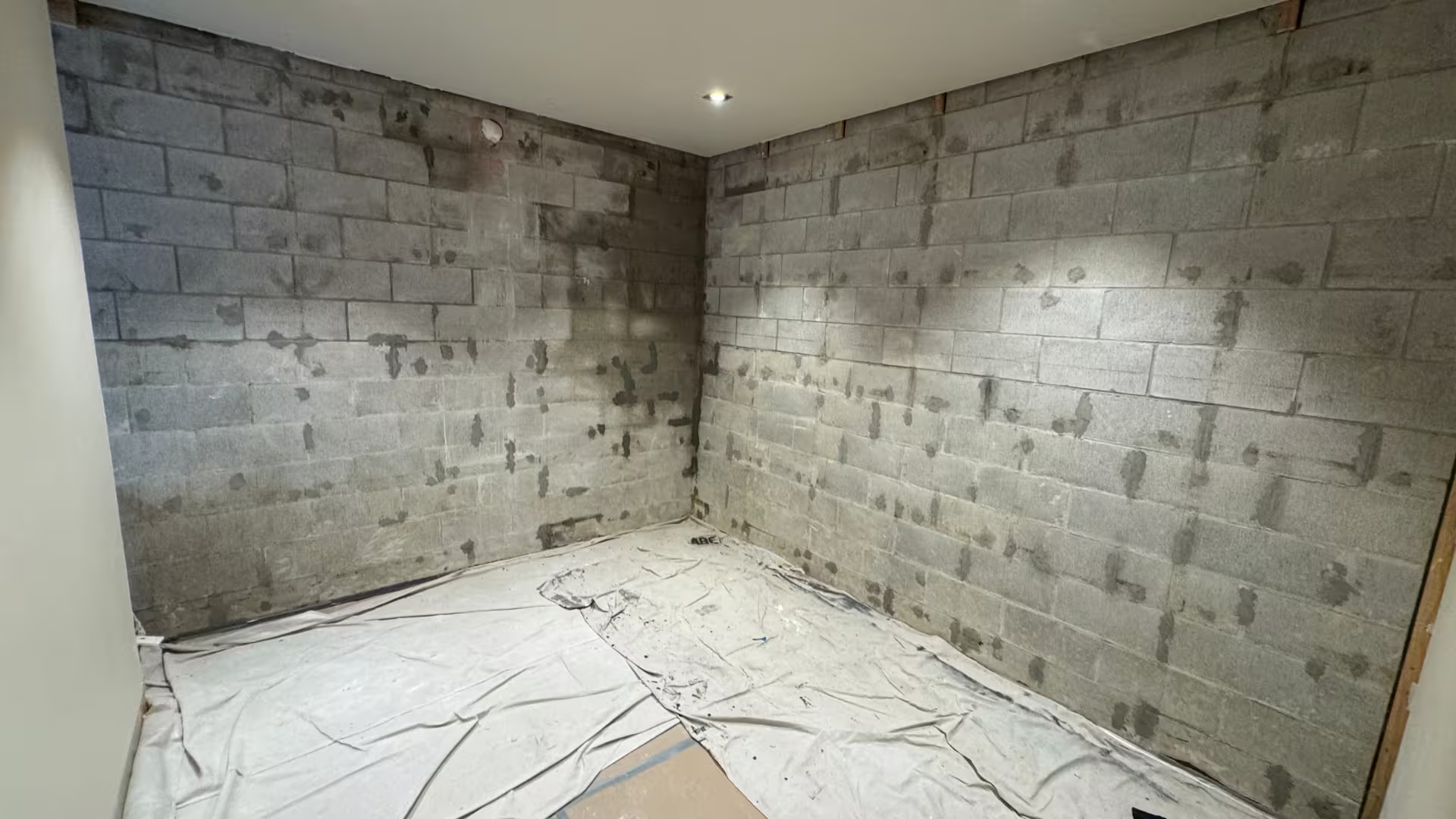
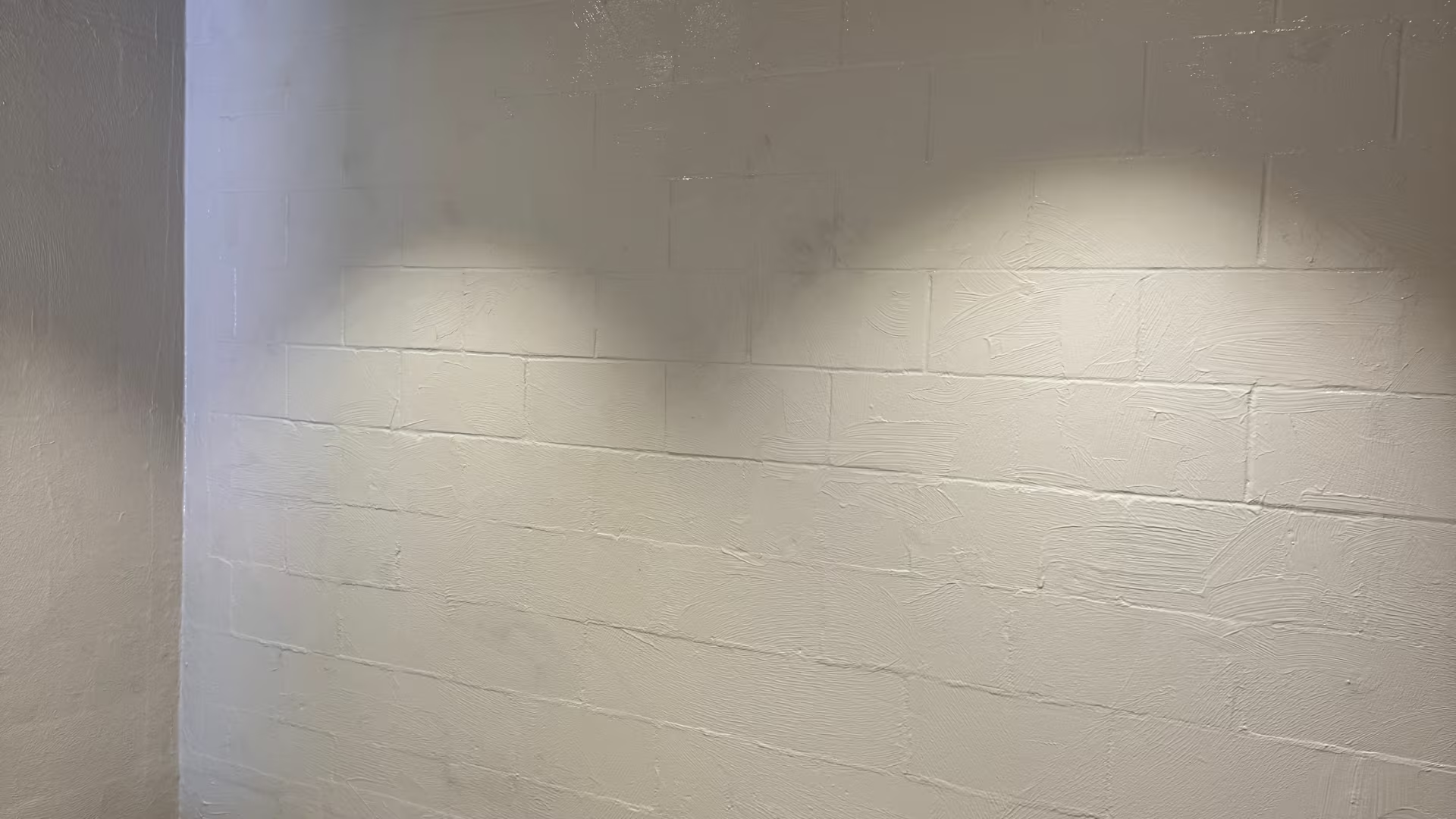
Leaking basement wall in Parnell
The linings looked fine, but the block walls behind them were wet. We stripped the linings, prepared the block and sealed both below-ground walls on the inside face with ARDEX WPM 300, joined to the floor. Read the Parnell case study.
Damp slab on the North Shore
The owners lifted old floor coverings mid-renovation and found a damp slab covered in salt deposits. We coated the slab and lower walls with ARDEX WPM 300 from inside the room, and the renovation carried on. Read the North Shore case study.
What our customers say
Using this company for my basement waterproofing was a brilliant decision. Alex was prompt, communicative, skilled and professional. His work was immaculate and he explained the process fully and made helpful suggestions for ongoing care. Alex has a calm, friendly, assuring manner and he was a pleasure to have working on my property. In fact he made the job fun! I would not hesitate to recommend Auckland Waterproofing Experts.
Barbara H., Google review, ★★★★★
Hi Hired Alex to provide waterproofing solutions for my rear retaining cinder block wall. In older 1970s homes they never used to waterproof these walls and it was seeping through and making the rear musty and damp. Alex ground the paint off and applied fibre glass reinforced waterproofing and filled in parts of the wall that were hollow with a special cement and now the room is all dry and actually pleasant to be in. Thank you Alex job well done.
Mike S., Google review, ★★★★★
From our Google reviews. More on our reviews page.
Recent basement jobs
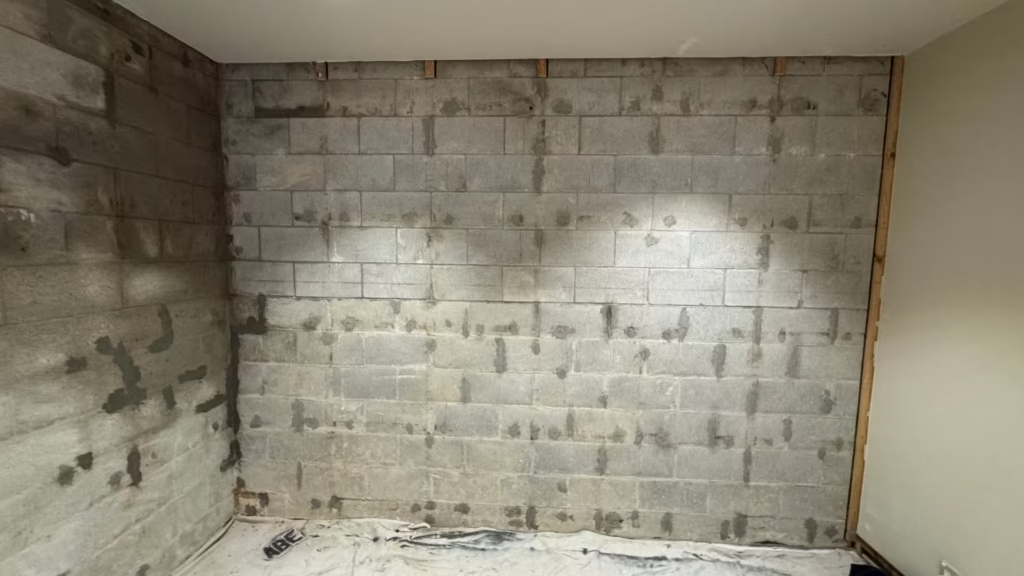
Leaking basement wall, Parnell
Block basement wall sealed from the inside with ARDEX WPM 300 HydrEpoxy, no digging. See the Parnell job
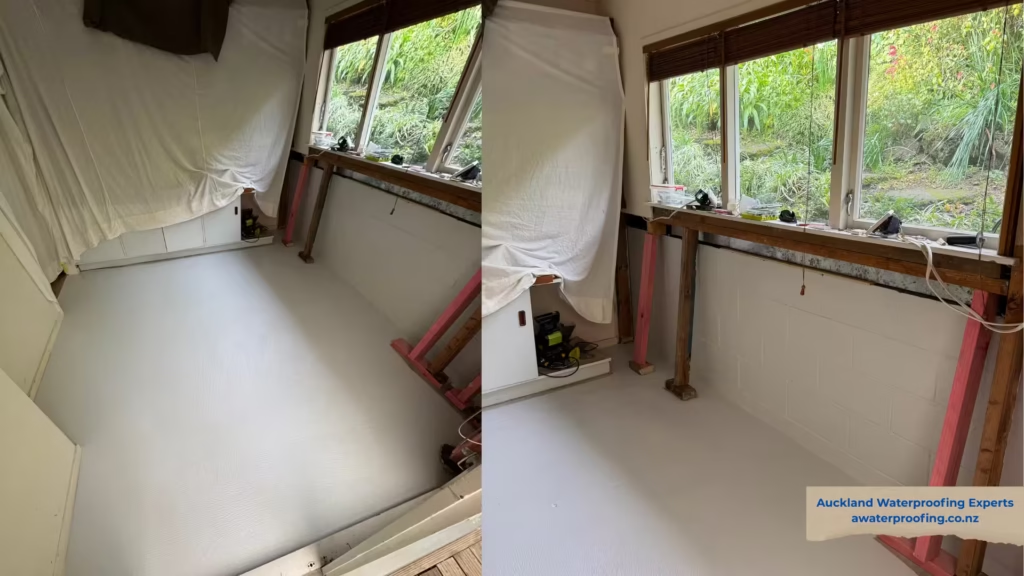
Basement slab, North Shore
Concrete slab sealed from the inside with ARDEX WPM 300 HydrEpoxy. See the North Shore job
Basement waterproofing cost in Auckland
As a guide, basement waterproofing with Auckland Waterproofing Experts starts from:
- Small basement room (up to 6 m²): from $990 + GST
- Full basement tank (about 40–60 m² of wall and slab): from $4,800 + GST
- Retaining-wall interiors: from $140 + GST per lineal metre
Prices as at October 2026. Every job is priced after a free site visit, once we’ve seen how the water gets in. Our waterproofing cost guide covers other kinds of work.
Warranty: 10 years on the ARDEX WPM 300 product, 5 years on workmanship, depending on the condition of the substrate.
Using the space once it is sealed
Once the coating has cured, the walls can be lined again and the room used as storage, a rumpus, an office or a guest room. Linings fix straight to the cured coating with a compatible adhesive (see the FAQs below). If you’re turning the space into something new, with layout, consents, drainage and finishes to think about, our guide to planning a basement renovation covers that side. Selling soon? See what to do about a damp basement before you sell.
Basement waterproofing across Auckland
We provide basement waterproofing across Auckland: the North Shore, Central Auckland including Parnell, and East, West and South Auckland. Free site visits. Call 022 630 6434.
Basement waterproofing FAQs
Yes, we can fix a basement that is actively leaking. We look at where and how the water is getting in on the free site visit and explain the approach for your basement before we price it.
For most existing Auckland basements, inside, because there’s no digging and the house, paths and garden stay as they are. Outside tanking suits new builds, or jobs where the outside of the wall is already dug out. That work is covered on our below-ground tanking page.
The area of wall and slab, the condition of the substrate, any linings that need to come off, and whether water is actively coming in. As a guide: from $990 + GST for a small basement room up to 6 m², from $4,800 + GST for a full basement tank of about 40–60 m² of wall and slab, and from $140 + GST per lineal metre for retaining-wall interiors. Prices as at October 2026. We confirm the price after the free site visit.
A typical job is about two days on site when no grinding is involved, depending on the situation. After that, the coating needs a 7-day full cure before battens and GIB go up.
No. All paint, laitance, curing compounds, oils and surface sealers must be mechanically removed before we can apply HydrEpoxy.
Full cure is 7 days, after which battens and GIB can go up.
Once the HydrEpoxy has fully cured (7 days), the wall linings can be fixed directly to the coating using a high-quality solvent-free construction adhesive that is compatible with epoxy-coated concrete and plasterboard. Suitable products include Gorilla Grip (solvent free), Gorilla Wallboard Adhesive, or Bostik High Tack H785, or equivalent solvent-free wallboard adhesives.
Yes. Once HydrEpoxy has cured for a minimum of 24 hours, it can be tiled over, and tiling should ideally be completed within 5 days. Your tiler will need to install a suitable “keyed” layer over the HydrEpoxy (for example a sand-broadcast slurry or compatible tile adhesive system) before laying tiles. They should choose products that are specifically compatible with epoxy moisture barriers and follow the manufacturer’s instructions.
Yes. A Licensed Building Practitioner provides a PS3 producer statement where the job needs one.
10 years on the ARDEX WPM 300 product, 5 years on workmanship, depending on the condition of the substrate.