PS3 waterproofing in Auckland: what a producer statement is and how Council sign-off works
A plain-English guide from Auckland Waterproofing Experts
PS3 waterproofing sign-off in Auckland starts with a producer statement, signed by the person who applied the membrane, confirming they installed it to the building consent and the manufacturer’s instructions. Auckland Council asks for one for each membrane on a consented job: roofs, decks, gutters, below-ground tanking and wet areas. It must be backed by photos and test results. Without it, your code compliance certificate (CCC) can stall. Here’s how PS3 waterproofing works, step by step.
What is a PS3 for waterproofing?
“PS3” stands for Producer Statement – Construction. For waterproofing, it’s completed by the applicator who actually did the work, on Auckland Council’s PS3 waterproofing form (AC2314). On that form, the applicator confirms that:
- they’ve seen the building consent, its conditions and the waterproofing details
- the substrate was suitable for the membrane
- the membrane was applied to the manufacturer’s specifications and technical requirements
- the work complies with the consent and the relevant Building Code clauses: B2 Durability with E2 External Moisture for outside membranes, and B2 with E3 Internal Moisture for wet areas.
The form also states that Council will rely on the producer statement when deciding whether the work complies. That’s why it matters who signs it.
When does Auckland Council need a PS3 for waterproofing?
Council’s guide to booking inspections (AC1824, June 2026) says a PS3 is to be submitted by the waterproofing membrane applicator for each membrane application, giving roofs, decks, tanking and wet areas as examples. In practice, that covers:
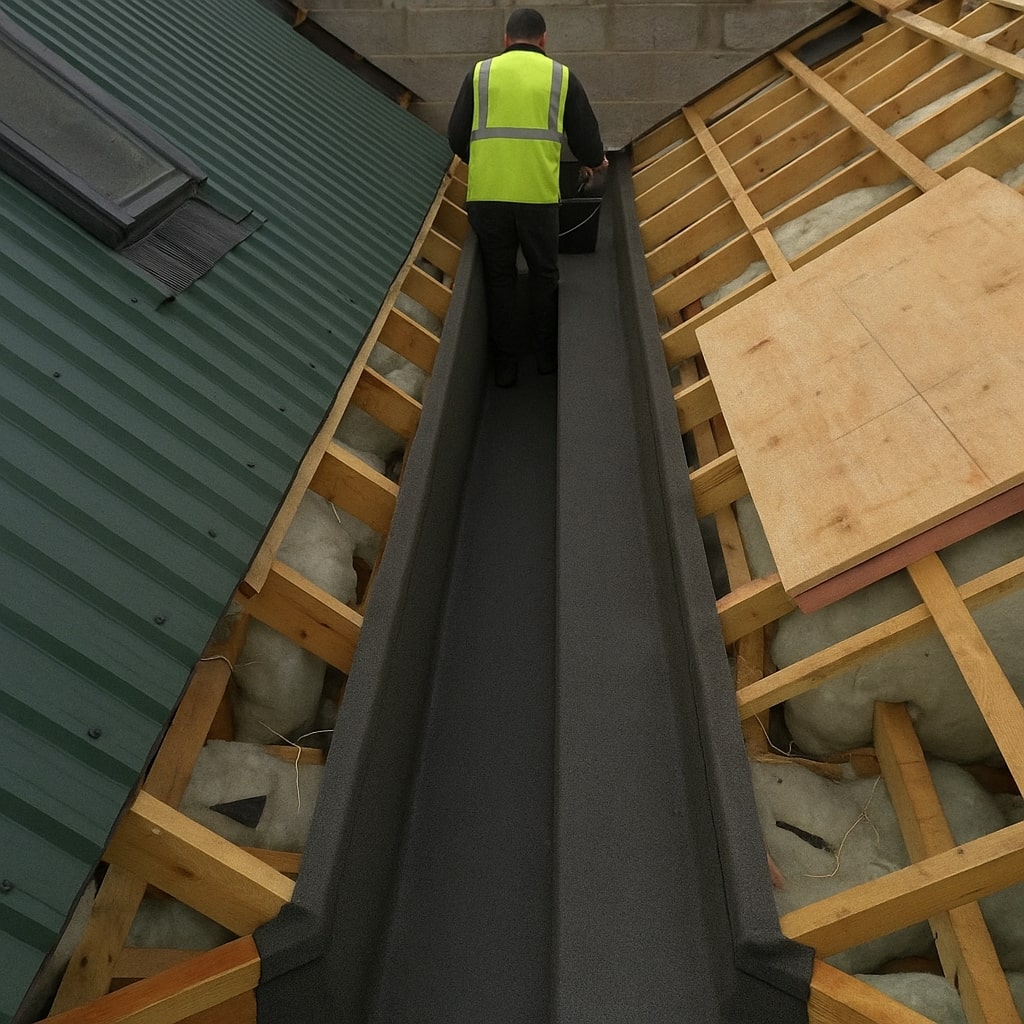
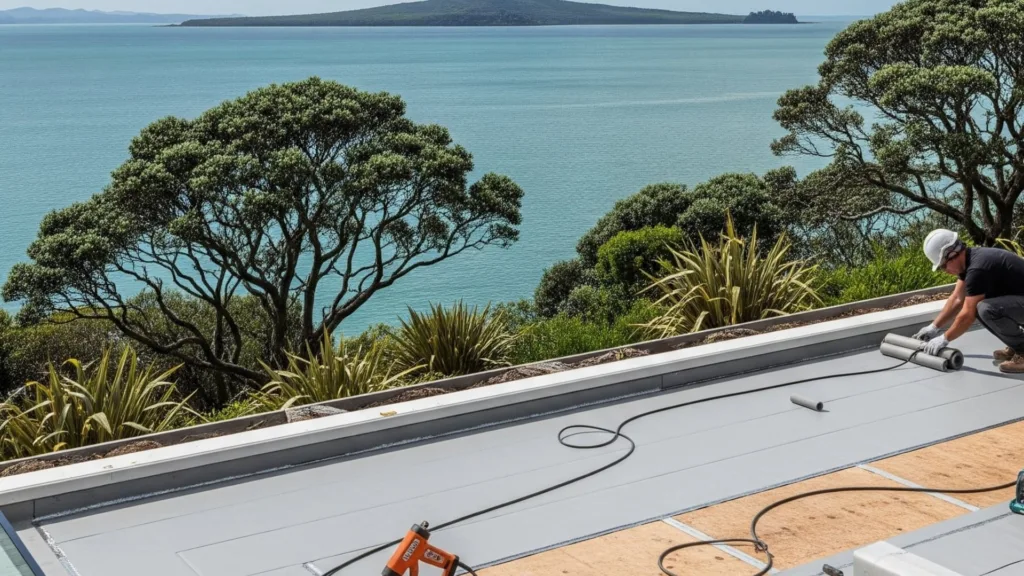
- membrane roofs, decks and internal gutters (see our deck waterproofing and roof waterproofing pages)
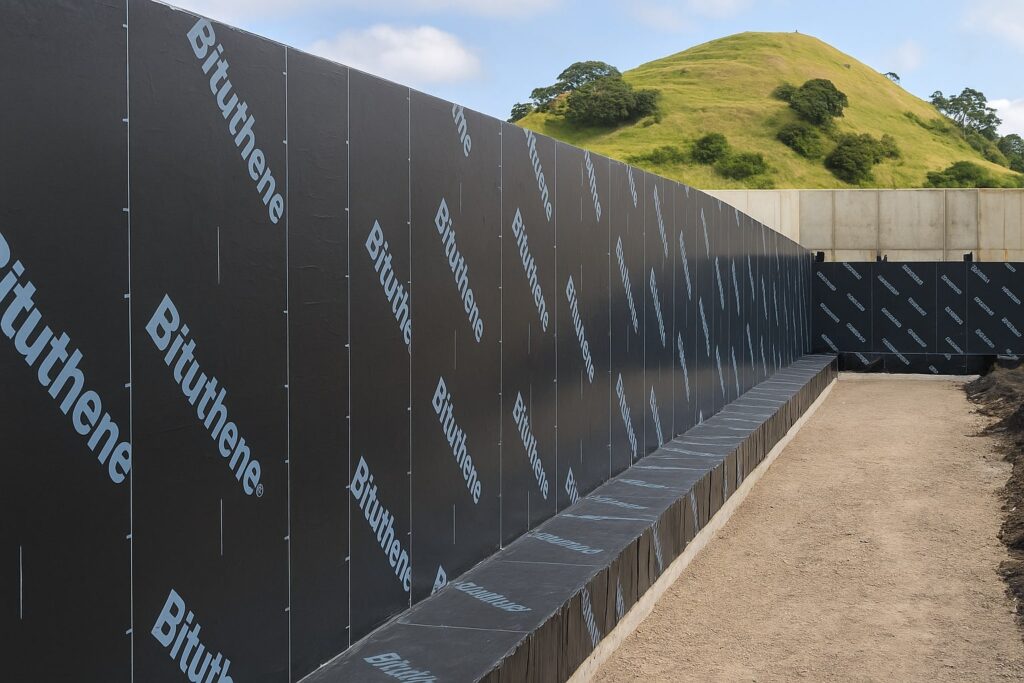
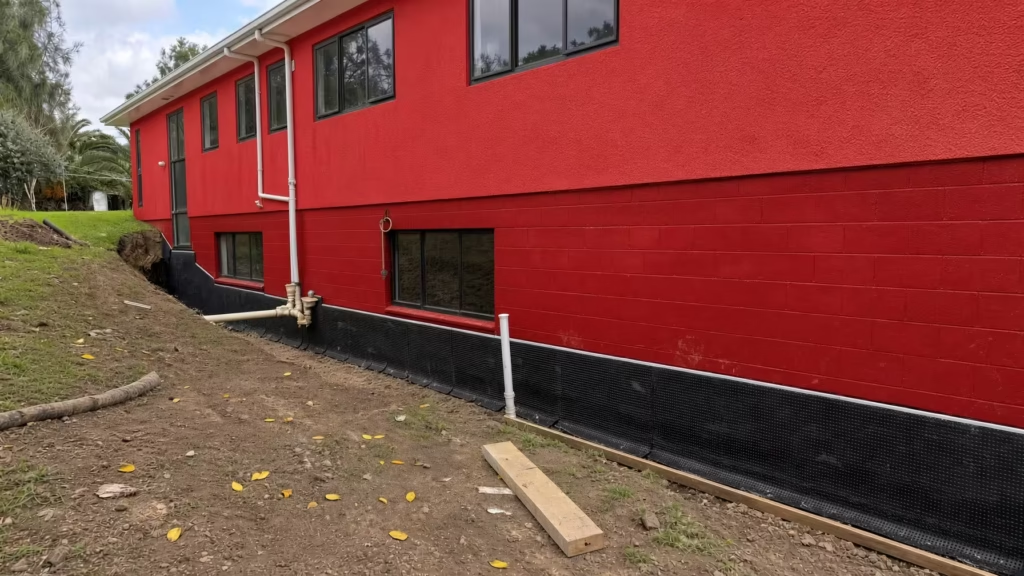
- below-ground tanking behind retaining and basement walls
- internal wet areas such as showers and bathrooms
If your job doesn’t need a building consent, there’s no Council sign-off to support, but a PS3 and photo record are still a useful record of what was installed.
What evidence has to come with the PS3?
This is where many jobs come unstuck. AC1824 says the PS3 must be supported by quality assurance evidence, especially photos of things that can’t be seen at inspection. Council’s list includes:
- substrate material, gradient and fixings
- primer and membrane thickness, with a wet film thickness gauge photo for each coat
- bond breakers and water stops installed before the membrane
- the membrane product packaging, junctions, laps and upstands under cladding or joinery
- flood test evidence, or results of electric field vector mapping (EFVM), an electronic leak test
- photos below the wet area, such as the subfloor, while the flood test is on, where applicable
- the applicator’s licence, photographed with the wet area in the background
The PS3 form itself makes flood or electronic testing mandatory for all external membranes, and flood testing mandatory for all tiled internal showers and wet areas. It asks for the product warranty, the workmanship warranty and, for external restricted building work, the LBP record of work to be attached.
PS3 instead of an inspection, or in support of one?
Auckland Council’s producer statement policy (AC2301) draws a clear line. A PS3 can be offered in support of a Council inspection by a contractor who isn’t on the Council’s Producer Statement Register. But if the PS3 is offered instead of an inspection Council would otherwise carry out, the author must be on the register.
For internal waterproofing, AC1824 says an inspection isn’t required if the work is done to the building consent and the applicator is an approved PS3 author for internal waterproofing. Council records their registration details, and the PS3 with its photo evidence is attached to the CCC application. Membrane roofs, decks and gutters still get a Council inspection that checks the product and its watertightness, with a flood or flow test, and that work is restricted building work for a Roofing LBP. Tanking behind retaining walls has its own inspection, which also checks the subsoil drain.
How PS3 waterproofing sign-off works on an Auckland job
Here’s the usual order on a consented job with Auckland Waterproofing Experts:
- Free site visit to look at the area, find where water is getting in, and check the consent details.
- Substrate check and preparation, photographed before any primer goes on.
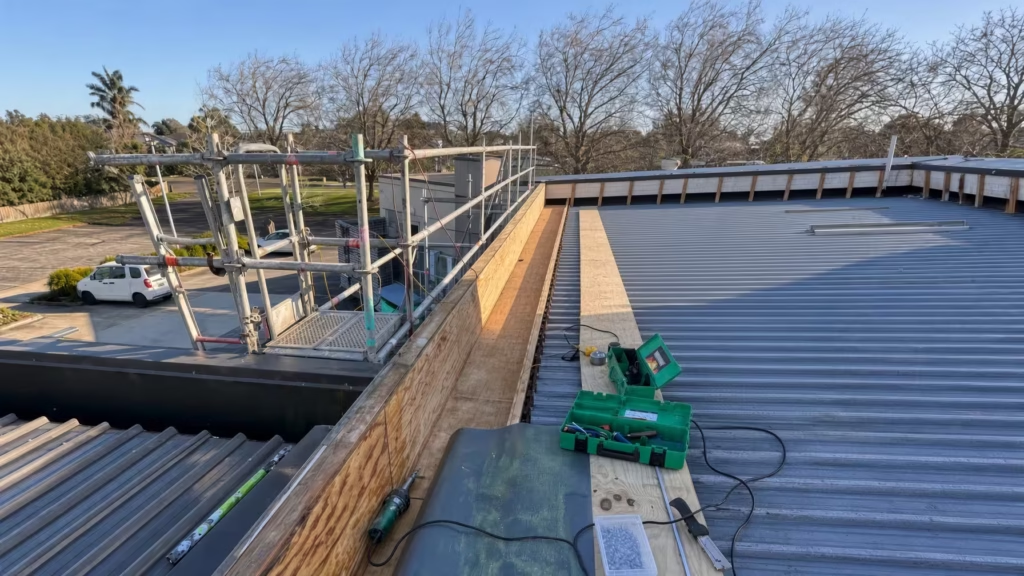
- Membrane installed to the manufacturer’s system, with photos of each coat or layer, corners, upstands and outlets.
- Flood test or electronic test, photographed or recorded.
- Council inspection where the consent requires one.
- PS3 completed and handed over with the photo evidence, warranty documents and, where it applies, the LBP record of work, ready for your CCC application.
Questions we get about PS3 waterproofing in Auckland
Can a homeowner write their own PS3?
No. The PS3 is completed by the applicator who carried out the waterproofing. Council relies on that person’s statement and evidence.
What happens if there’s no PS3?
Council may not have what it needs to be satisfied the work complies, which can hold up your code compliance certificate. Fixing missing evidence after the tiles or backfill are on is hard, so it pays to arrange the PS3 before work starts.
Does a PS3 replace a warranty?
No. A PS3 is a compliance statement. Warranties are separate. For example, on ARDEX WPM 300 HydrEpoxy basement work, ARDEX gives a 10-year product warranty and Auckland Waterproofing Experts gives a 5-year workmanship warranty.
Do you provide a PS3?
Yes. Auckland Waterproofing Experts provides a PS3 for the waterproofing we install when the job needs one, along with the photo record behind it.
Need a PS3 for waterproofing in Auckland?
If you’re planning consented deck, roof, basement or bathroom work, talk to us before work starts so the evidence is captured at every stage. Call Alex at Auckland Waterproofing Experts on 022 630 6434 for a free site visit and an itemised quote. More answers are on our FAQs page.
Email aucklandwaterproofing@gmail.com. We’re available 7am to 7pm, Monday to Saturday, based in Castor Bay and working across Auckland.