Overland flow path basement risk: what Auckland owners should check
How to read the council flood maps, and where waterproofing fits when surface water heads for your lower level
Auckland Council has just completed the Te Ararata flood resilience project in Māngere, which reduces flood risk for more than 250 properties, and it’s a reminder that a lot of our flooding isn’t rivers. It’s rain running downhill over the ground. If you have a basement, a lower-level garage or a rumpus room dug into a slope, overland flow path basement risk is worth understanding before you finish the space or buy the house.
What an overland flow path is
Our Auckland’s guide to Auckland’s regional flood maps explains that overland flow paths are the route water takes downhill when there’s no piped network, or when the pipes are at capacity. They’re shown on the maps as lines, but in a storm the water spreads more widely than the line suggests.
Council’s flood information is in the Flood Viewer and Geomaps, and a LIM includes a “Natural Hazards – Flooding” map showing flood plains, flood prone areas, flood sensitive areas and overland flow paths.
What the maps can and can’t tell you
- The maps aren’t site-specific and don’t include mitigations such as walls or drains on a property.
- Overland flow paths are worked out from the shape of the land, not from hydraulic modelling.
- If nothing is mapped on your section, it doesn’t rule out flooding, including from flow paths on nearby properties.
- Most of the maps use 2016 LiDAR survey data. A new survey was flown in 2024, and models are being rebuilt catchment by catchment, so the maps may change.
- Council suggests talking to them first if you have questions about your property.
Council’s Te Ararata announcement also notes that Aucklanders can help reduce flood risk by preparing their homes for severe weather, understanding local flood hazards and having an emergency plan.
Overland flow path basement checks: start outside
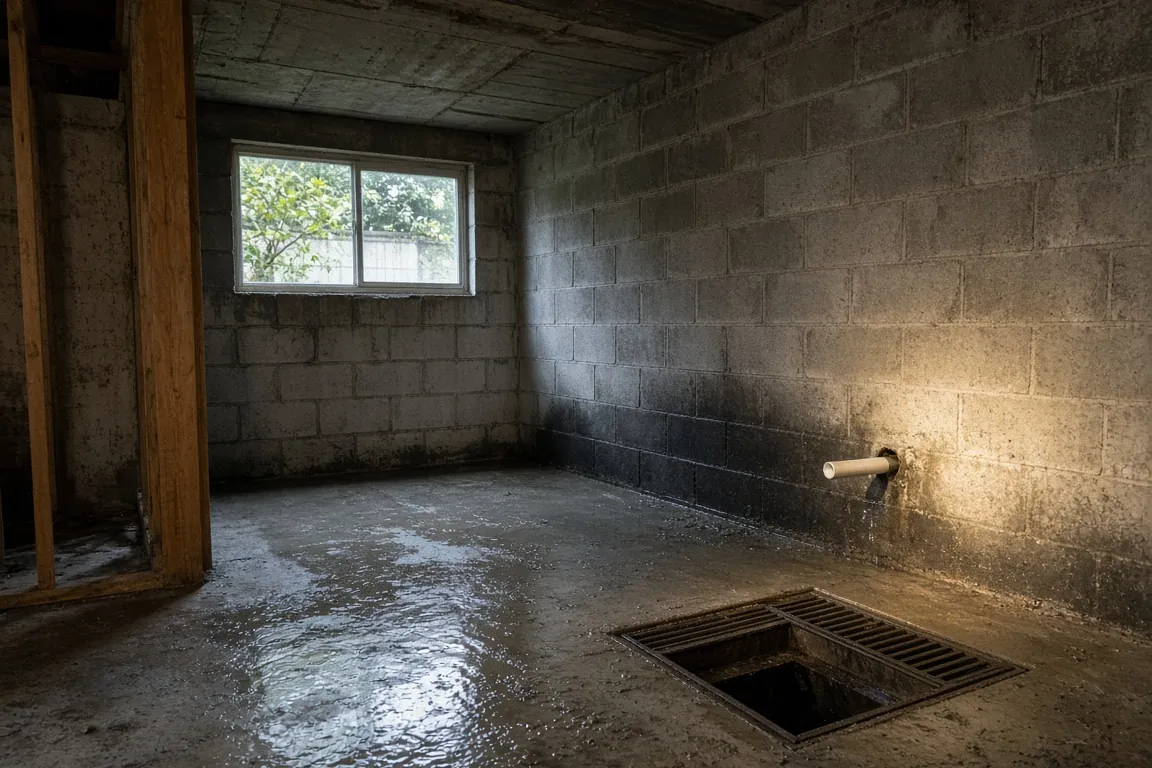
BRANZ’s flood-resilient homes guidance suggests getting a LIM and checking council flood maps, and designing to avoid the risk of overland water flooding a basement. It mentions considering a sump pump with a low point to collect water, effective seals around penetrations in exterior walls, permeable paving, and shaping driveways and outdoor areas to direct water away from the house. It also suggests avoiding level entries in flood-prone spots and locating external doors in less flood-prone areas.
BRANZ adds that where stormwater flow paths cross private property, they should never be blocked with sheds, walls or other solid objects. Water that’s pushed somewhere else becomes someone else’s problem, often the neighbour downhill.
Where waterproofing fits, and where it doesn’t
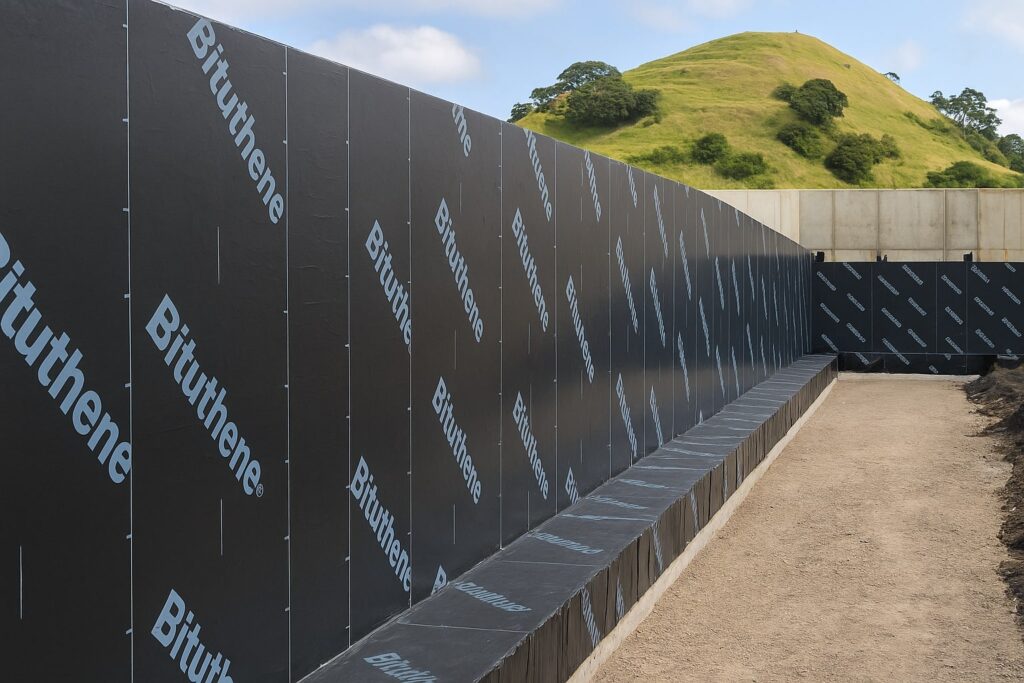
Waterproofing deals with water pressing on and soaking through walls and floors. It doesn’t stop a sheet of surface water coming in under a garage door or through a low window. So if your lower level sits in or near a flow path, the first conversation is usually about the land, the drainage and the openings, which may need a drainlayer, engineer or council input.
Once the surface water is managed, waterproofing helps with the water that’s left in the ground against the wall. On existing basements we often use HydrEpoxy (ARDEX WPM 300), a negative-side system applied to the inside face of the wall, so there’s no need to dig out the outside. On HydrEpoxy jobs, ARDEX gives a 10-year product warranty and we give a separate 5-year workmanship warranty. Those warranties are separate from the Building Code’s durability requirements.
Read more about basement waterproofing with HydrEpoxy, below-ground waterproofing, the early signs your basement is about to leak, and waterproofing retaining walls.
Lower level wet after heavy rain?
If water reached your basement or garage in a storm, we can help you work out whether it’s coming through the wall or across the ground. Call us at Auckland Waterproofing Experts on 022 630 6434 for a free site visit. We’ll explain what we find in plain English and send you an itemised quote. You can also read our waterproofing FAQs.
Email aucklandwaterproofing@gmail.com. We’re available 7am to 7pm, Monday to Saturday, based in Castor Bay and working across Auckland and the North Shore.