Water in basement repair in a Ponsonby villa: how we sealed the room from the inside
A basement room that let water in during heavy rain, sealed with fibreglass-reinforced HydrEpoxy. By Alex Salikov of Auckland Waterproofing Experts.
This water in basement repair was for a Ponsonby villa where water seeped into a basement room in heavy rain. After a free site visit and free quote, we stripped the failing moisture barrier and paint, found water around the slab edge, patched it and applied two coats of fibreglass-reinforced HydrEpoxy over two days. The room is dry and usable.
The enquiry: water seeping into a villa basement
The job started with a request through our website. The owner of a villa in Ponsonby told us water was seeping into the basement whenever there was heavy rain.
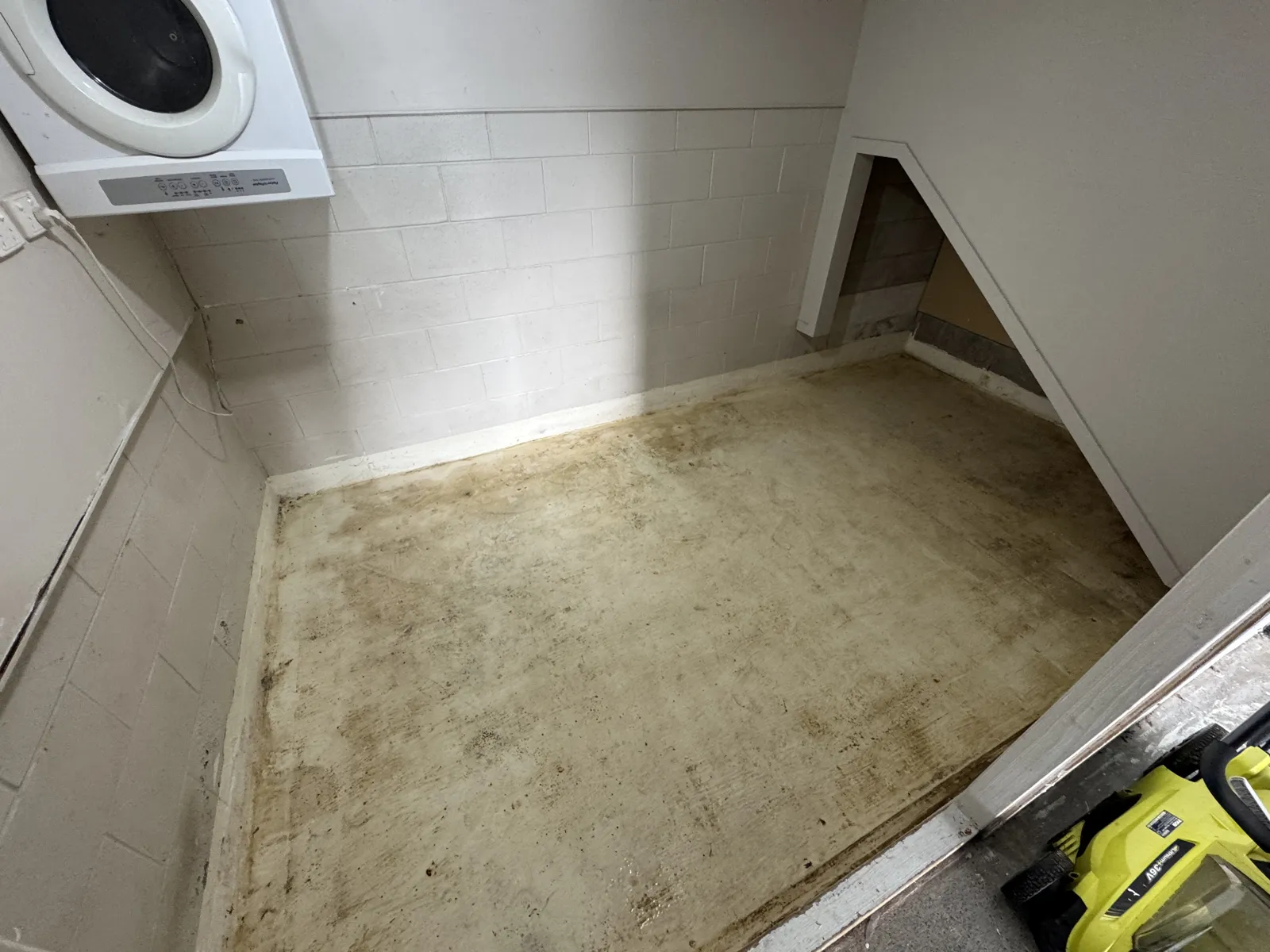
It’s a common story in Auckland homes with rooms below ground. A basement room can look fine in dry weather, then heavy rain shows exactly where the water is getting in. The space had block walls, a concrete slab and an old coating over both, and it was the coating that was giving up.

The free site visit and quote
We went out for a free site visit and inspected the basement. Rather than chase a single damp patch, we looked at the room as a whole and worked out a full solution for it.
Our view was that the room needed fibreglass reinforcement across the whole surface, not a patch here and there. A coating that only covers part of a room leaves edges and gaps for water to find, and in a basement, water is very good at finding them.
We put that into a free quote. The owner accepted it, and the work started.
What we did: the water in basement repair, step by step
Here’s the work in the order it happened.
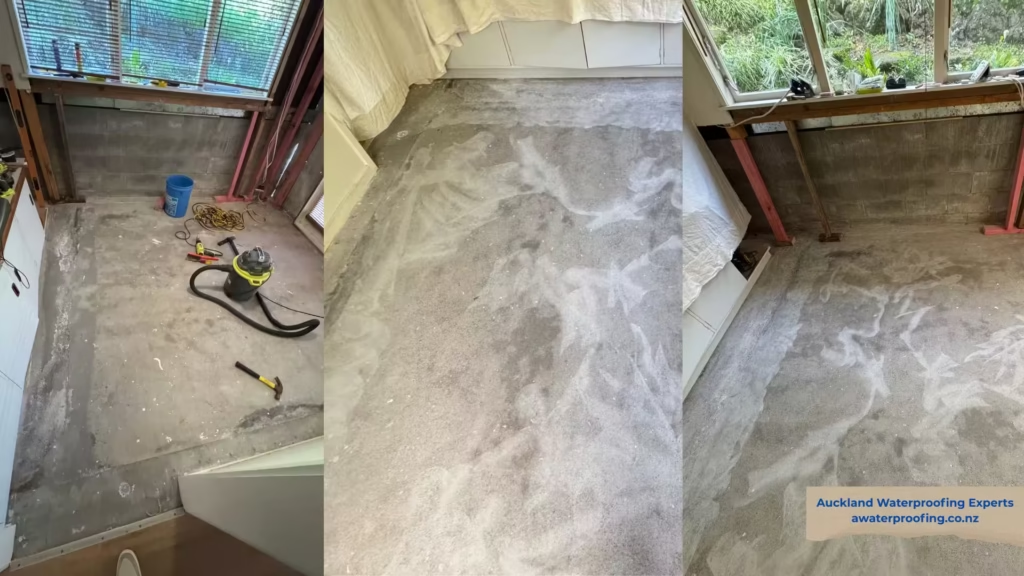
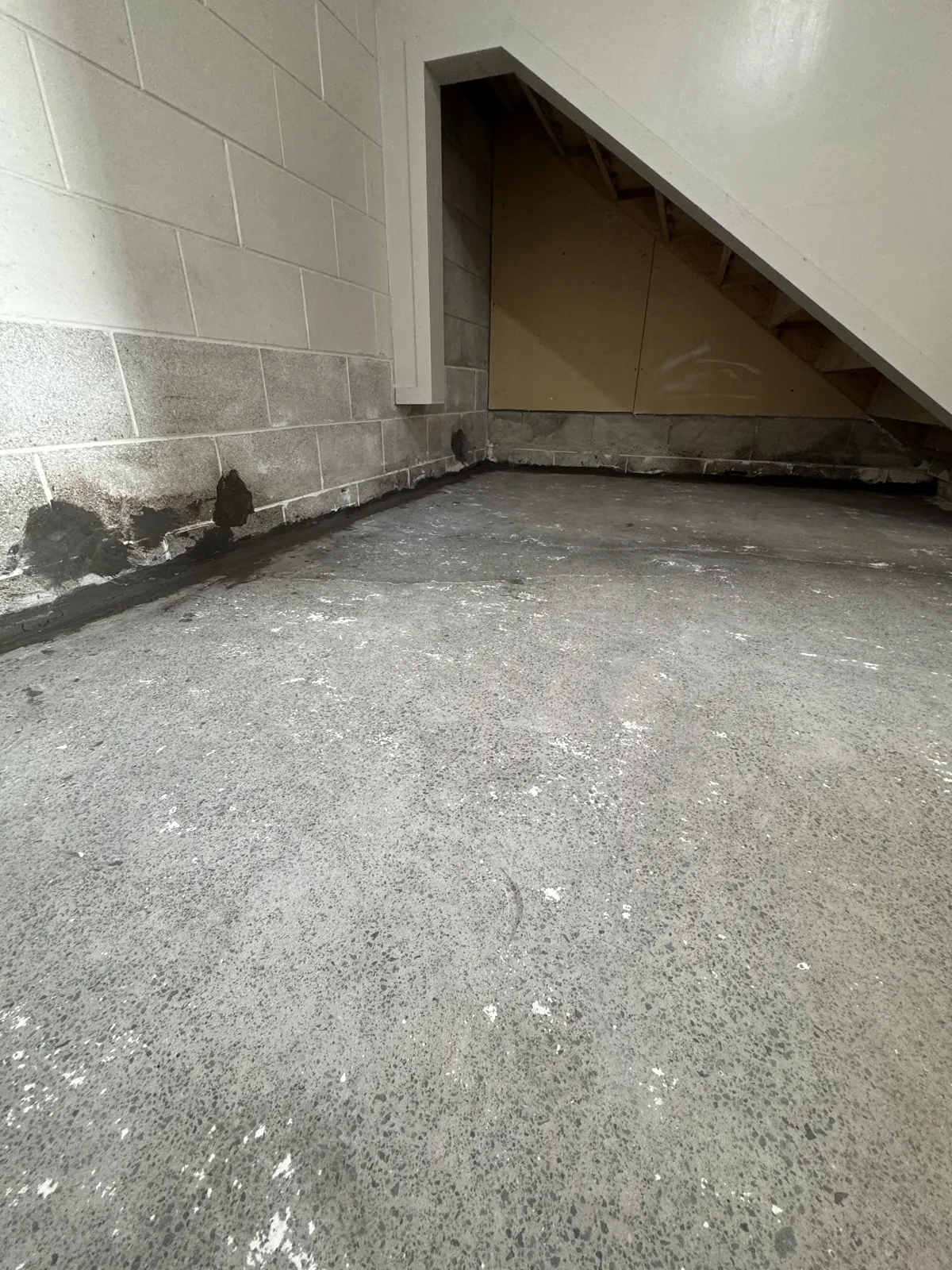
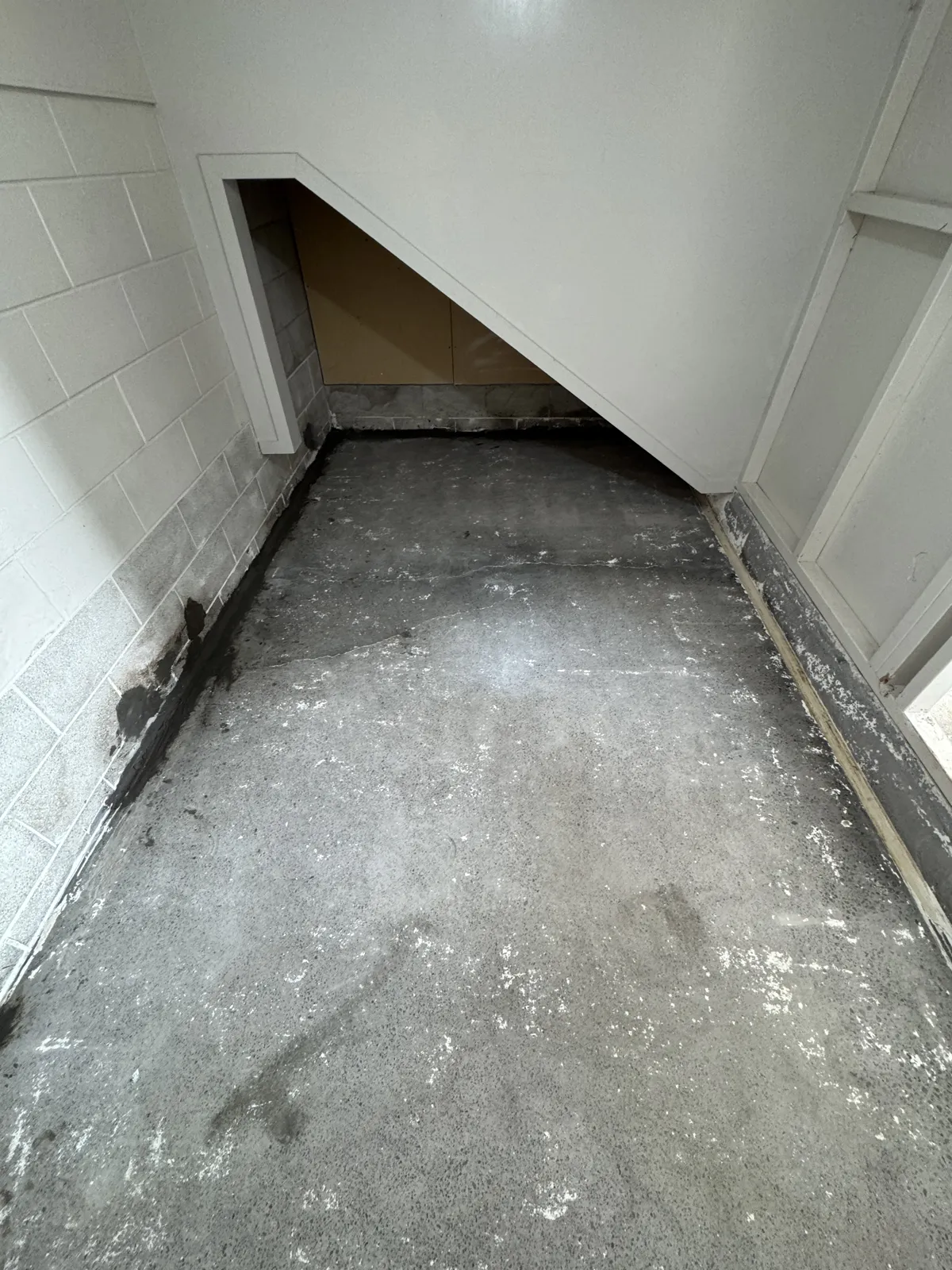
- Removed the old coating. We mechanically removed the failing moisture barrier and the paint, back to the concrete and block underneath. A new membrane can only hold on as well as the surface under it, so anything loose or failing has to come off first.
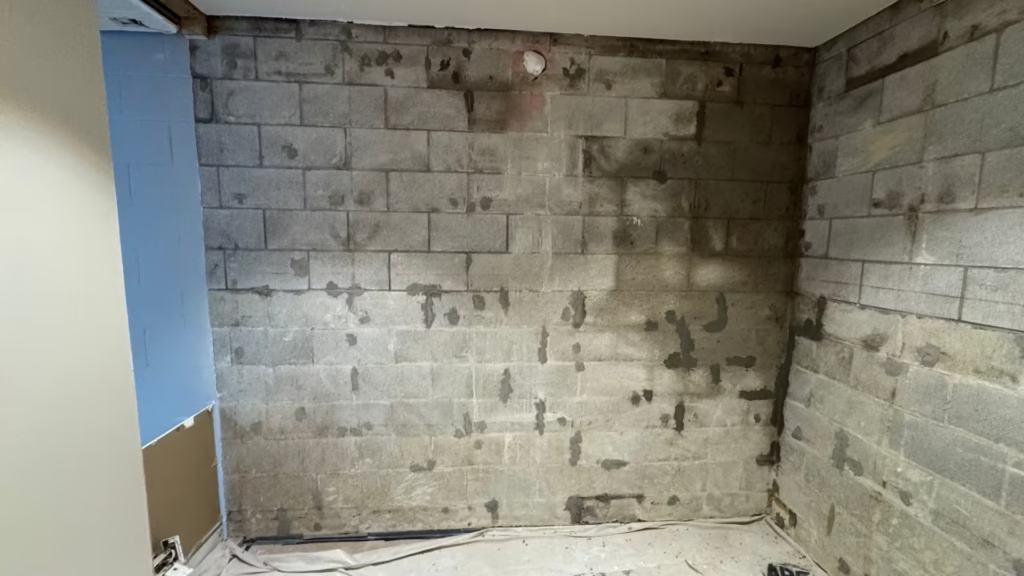
- Found where the water was sitting. While grinding, we found water sitting all the way around the slab at the bottom of the walls. It wasn’t visible until the old coating came off. This is why we check under a failing coating before deciding anything: what’s on top doesn’t always tell you where the water is.
- Opened and patched those areas. We opened up those areas around the slab edge and patched them with a specialised cement for leak repair to lock the moisture out, so the membrane would go over a sound base.
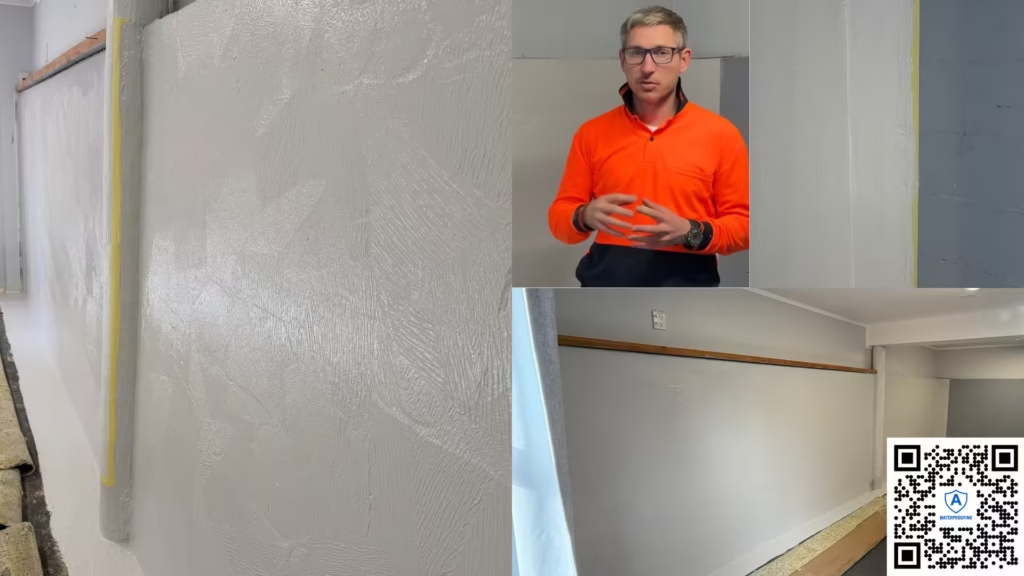
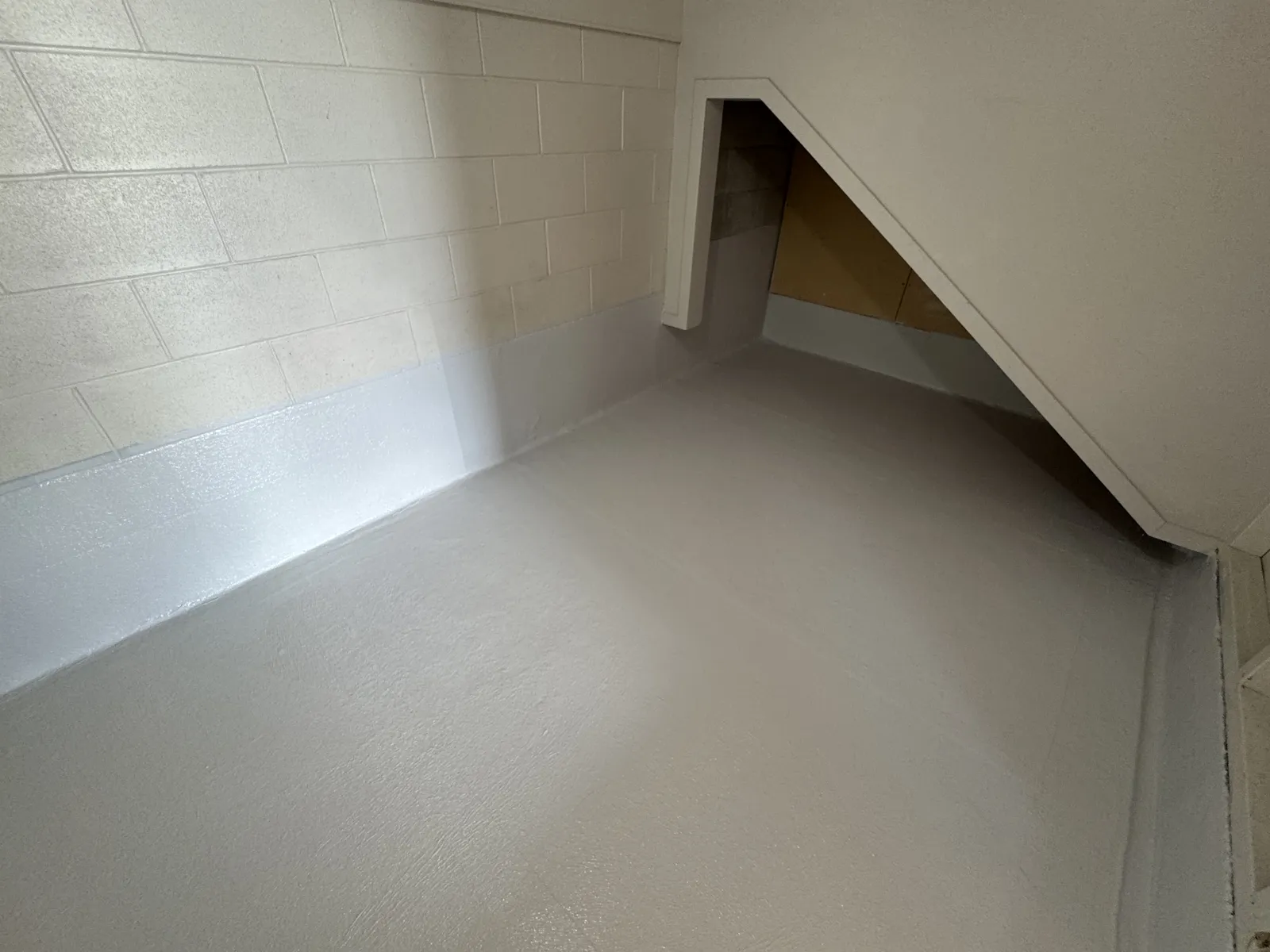
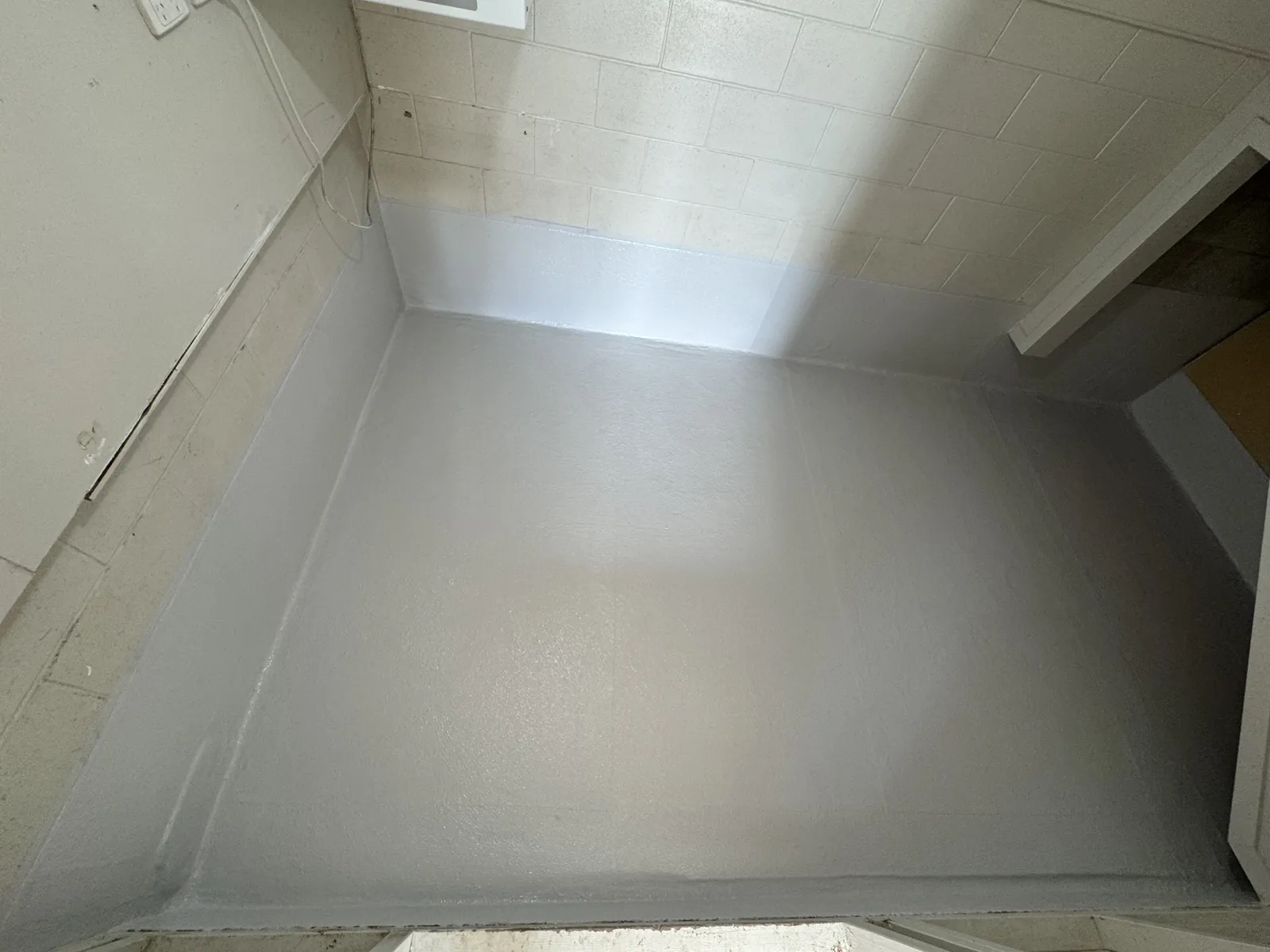
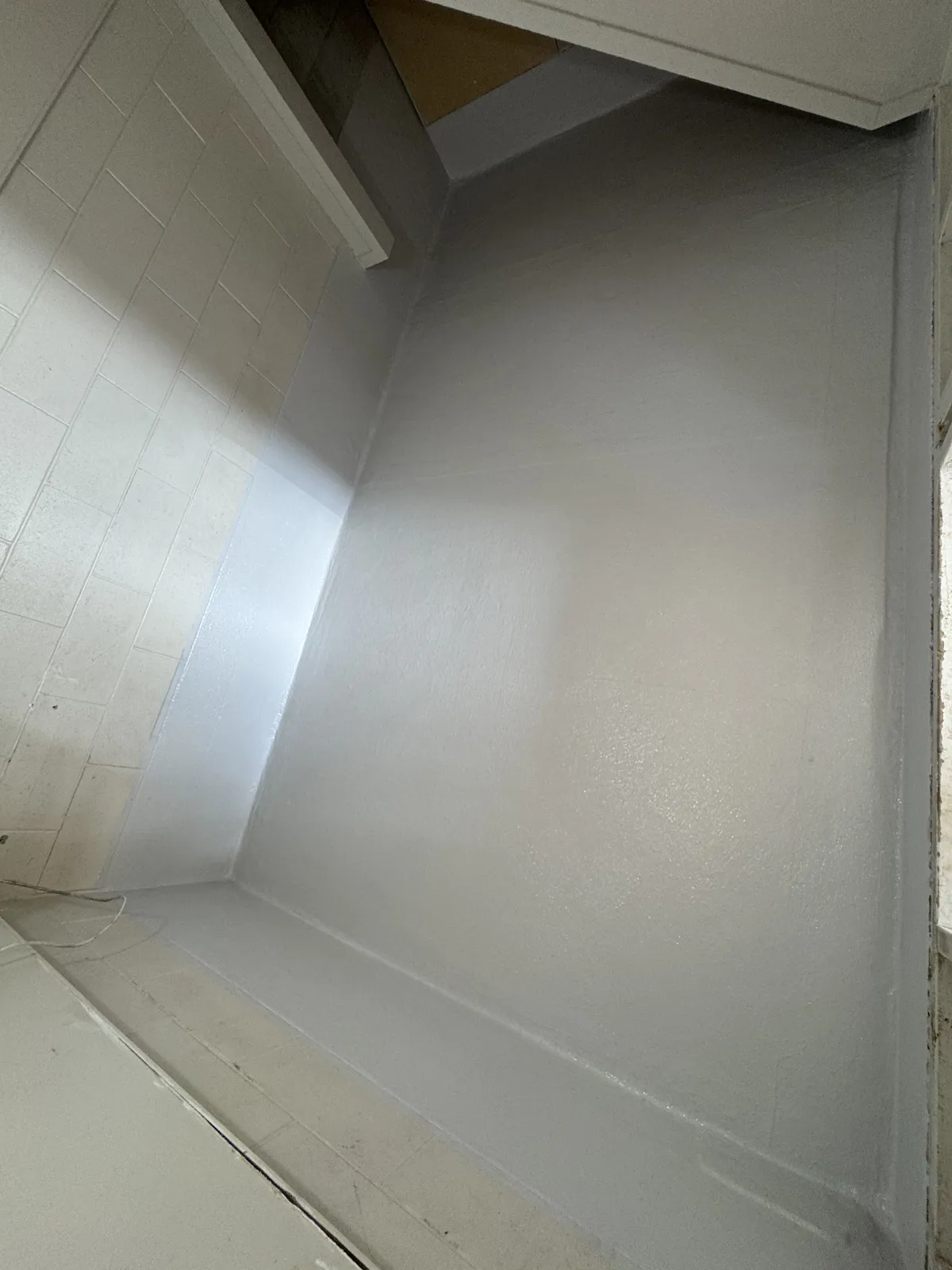
- Applied the membrane. We applied ARDEX WPM 300 HydrEpoxy in two coats over two days, fully reinforced with fibreglass across the floor and 500mm up the walls.
The fibreglass is what turns the coating into a reinforced membrane. It’s set into the HydrEpoxy, and you can see its texture in the close-up further down.
The result
There’s no more water in the basement. The owner has a dry, usable space again, and we have another happy client in Ponsonby, Auckland.

What this means for your basement
If water comes into your basement in heavy rain, the stain you can see isn’t always where the problem is. On this job, the real trouble was under the old coating, around the slab edge. That’s why we strip back, check what’s underneath and treat the whole room when it needs it. We’re a locally owned Licensed Building Practitioner (LBP) business with over 20 years’ combined experience, and we do this work from the inside, so nothing outside has to be dug up.
To see how we approach basements across the city, visit our Basement Waterproofing Auckland page. For another whole-room job, read about a basement job in Birkenhead.
Questions about water in a basement
How do you stop water seeping into a basement in heavy rain?
On this job, we inspected the room, mechanically removed the failing coating and paint, opened and patched the areas where water was sitting at the slab edge, then applied two coats of fibreglass-reinforced HydrEpoxy. Every basement is different, so we check yours before recommending anything.
How long did the membrane take?
The HydrEpoxy went on in two coats over two days.
How long does HydrEpoxy last?
In some cases, HydrEpoxy can last over 20 years. How it performs in your basement depends on the room and how water reaches it, which is what we look at on site.
Is there a warranty?
Yes, an ARDEX warranty where applicable. You also get photos of the work.
Do you charge for the visit or the quote?
No. The site visit is free, and so is the quote.
Get your basement checked
If water is seeping into a basement in Ponsonby or anywhere else in Auckland, we can come out for a free site visit and tell you what we find.
You can also read our waterproofing FAQs.